What makes Manialtepec Lagoon glow?
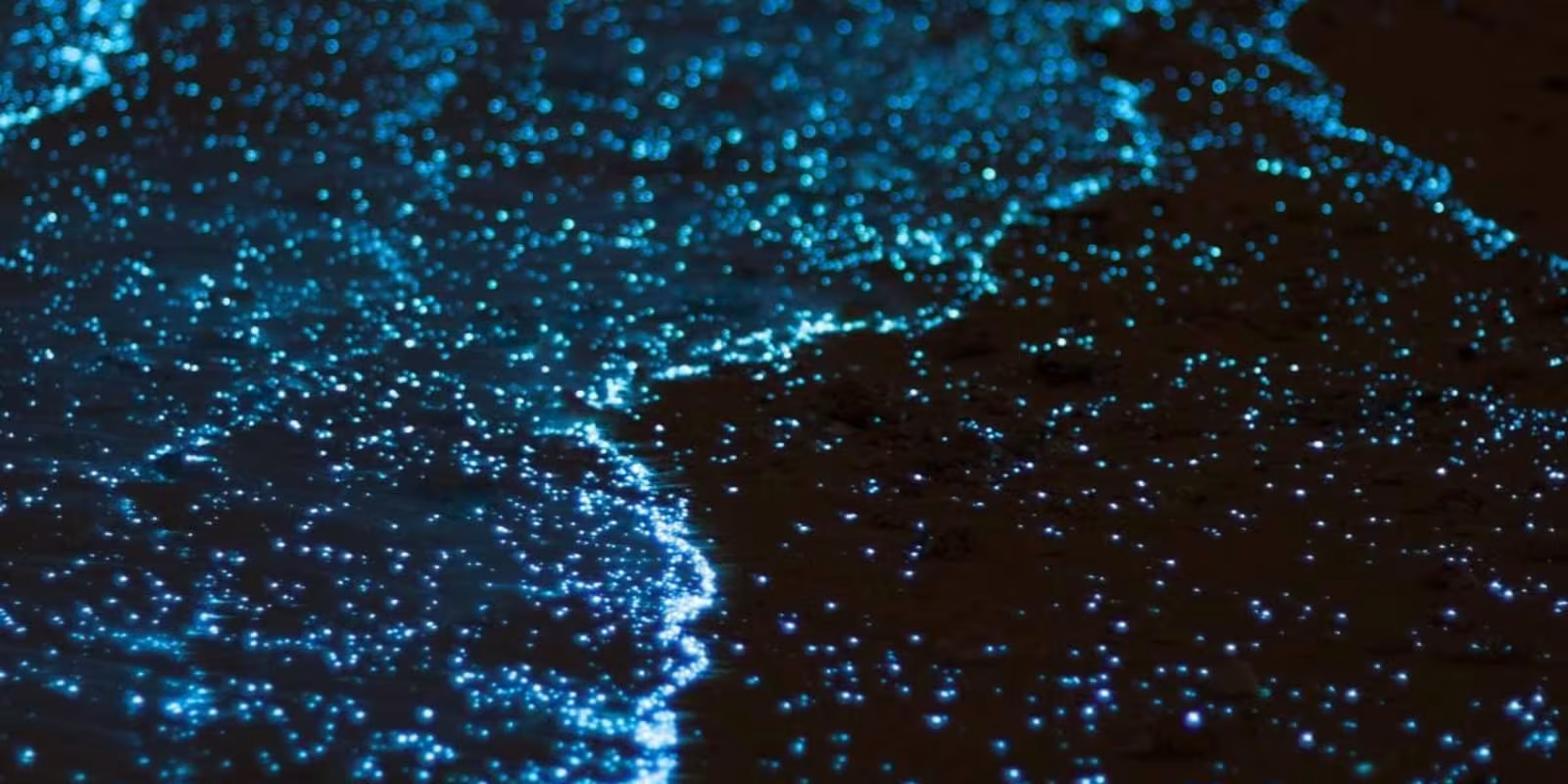
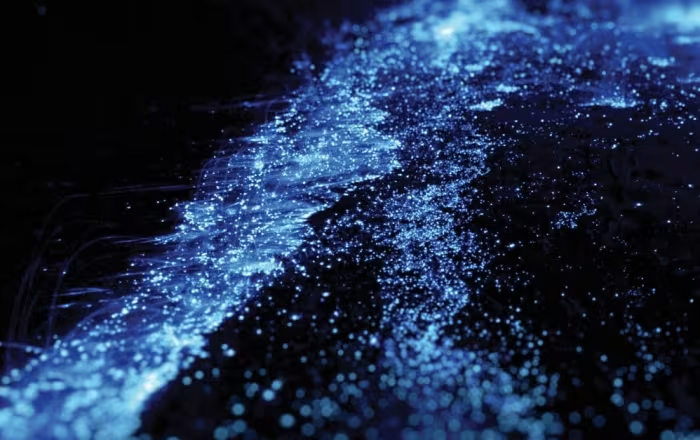
The first time you drag your hand through Manialtepec Lagoon at night and it lights up, the natural question is: what is that? The answer is millions of living things, each smaller than a grain of sand.
Meet the dinoflagellates
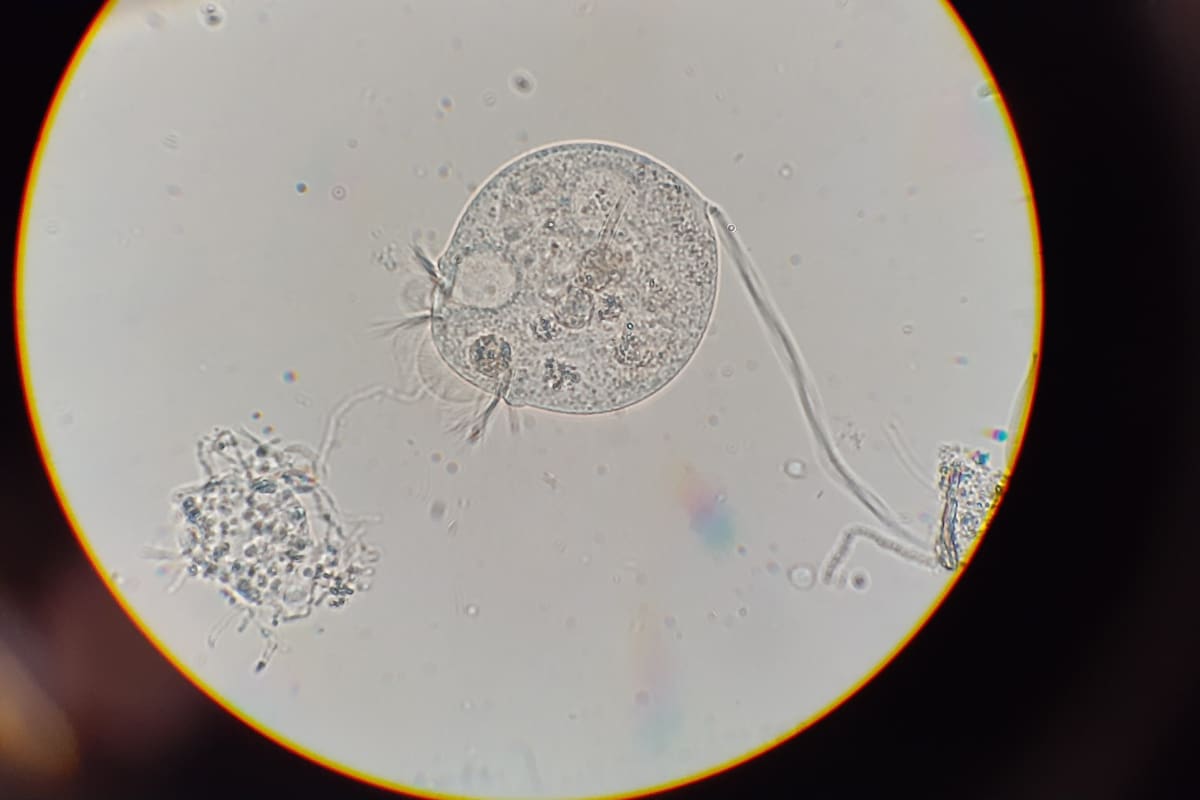
The light comes mostly from dinoflagellates, single-celled plankton that drift in the water. Many species can make their own light. When the water around them is disturbed, by a paddle, a fish or your arm, the pressure changes their cell membrane and triggers a tiny flash.
How living things make light
Inside each cell, a molecule called luciferin reacts with oxygen with the help of an enzyme called luciferase. The reaction releases energy as visible light instead of heat, which is why it is sometimes called "cold light". The same basic chemistry powers fireflies, some jellyfish and many deep-sea fish.
The flash lasts a fraction of a second. You see a continuous trail only because thousands of cells fire one after another as the water moves.
Why do they glow at all?
Scientists think it is a defense. The leading idea is the "burglar alarm" theory: when a small predator starts eating the plankton, the flash makes the predator visible to bigger animals that hunt it. Lighting up is a way of calling for help.
Why Manialtepec is special
Bioluminescent plankton live in oceans all over the world, but they are usually too spread out to notice. Manialtepec Lagoon has the right combination to concentrate them:
- Warm, shallow water that stays calm and sheltered from the open ocean.
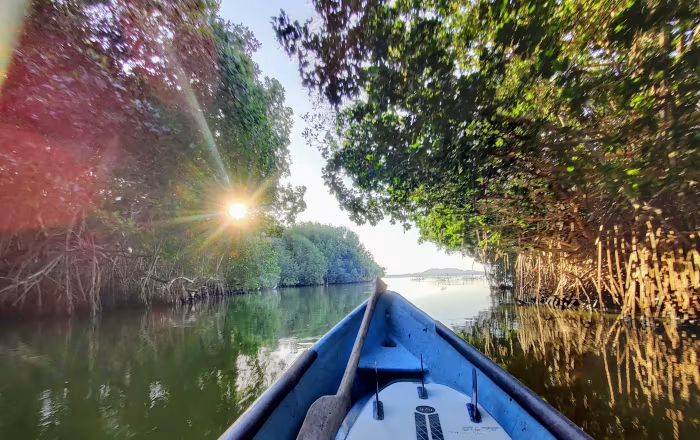
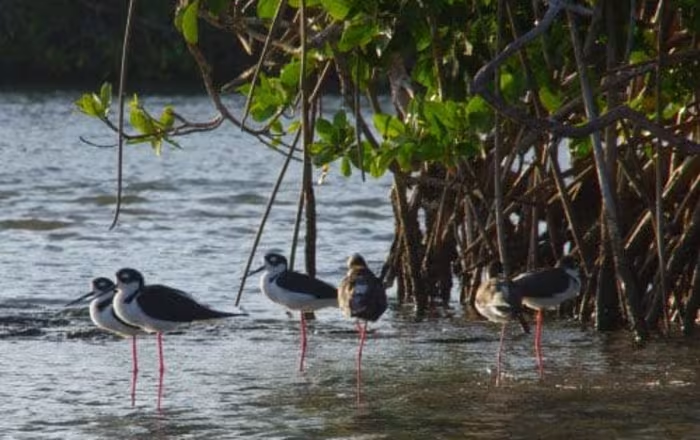
- Mangroves that feed the water with nutrients from fallen leaves.
- Seasonal rains that wash in more nutrients and trigger plankton blooms.
- Little light pollution, so even a faint glow is easy to see.
What you are actually seeing
Each flash comes from a single cell and lasts a fraction of a second, so what reaches your eyes depends on how many cells fire at once. Drag a hand slowly and you get a smooth trail. Splash and you get a burst of separate sparks. Where the plankton are dense, one paddle stroke can light up a patch of water the size of a table.
The color is almost always blue or blue-green. That is no accident: blue light travels farthest through seawater, so most marine organisms that make light evolved to make it in that range.
Bioluminescence, phosphorescence or fluorescence?
People often call the glowing sea "phosphorescence", and sailors have used the word for centuries. Strictly speaking, it is a different thing:
- Bioluminescence is light made by a living thing through a chemical reaction. It needs no outside light at all.
- Fluorescence is when a material absorbs light and gives it back instantly in another color, like a highlighter under a black light.
- Phosphorescence is similar, but the material releases the light slowly, like glow-in-the-dark stars after you switch off the lamp.
The lagoon is not storing up sunlight and giving it back at night. The plankton make their light on the spot, in the dark, every time the water moves.
More common than you think
Making light is one of the most widespread tricks in nature. Fireflies use it to find mates, anglerfish to lure prey, and some fungi glow faintly on rotting wood. In the open ocean it is the rule rather than the exception: a large 2017 study of animals filmed in the deep water off California found that roughly three quarters of them could produce light. What makes Manialtepec rare is not that glowing plankton exist, but that so many gather in calm, shallow water where you can see them from the surface and swim among them.
Is it the same every night?
No. The plankton population rises and falls with the nutrients in the water, and how bright it looks depends on how dark the sky is. Rain and the new moon usually mean the strongest glow. Our guide to the best time to go and the moon phase guide explain how to pick your night, and our article on the mangroves shows where those nutrients come from.
Wondering whether it is safe to get in? The plankton are far too small to feel, they do not sting or bite, and swimming is part of the tour. Here is what swimming in the glow is really like.
How to protect it
The plankton are sensitive. Sunscreen, lotions and insect repellent harm them, which is why we ask guests to get in the water with clean skin. Our guides also keep boat traffic and engine use low in the glowing areas. Small habits like these are what keep the lagoon glowing for the next visitors.