The best time to see bioluminescence in Puerto Escondido
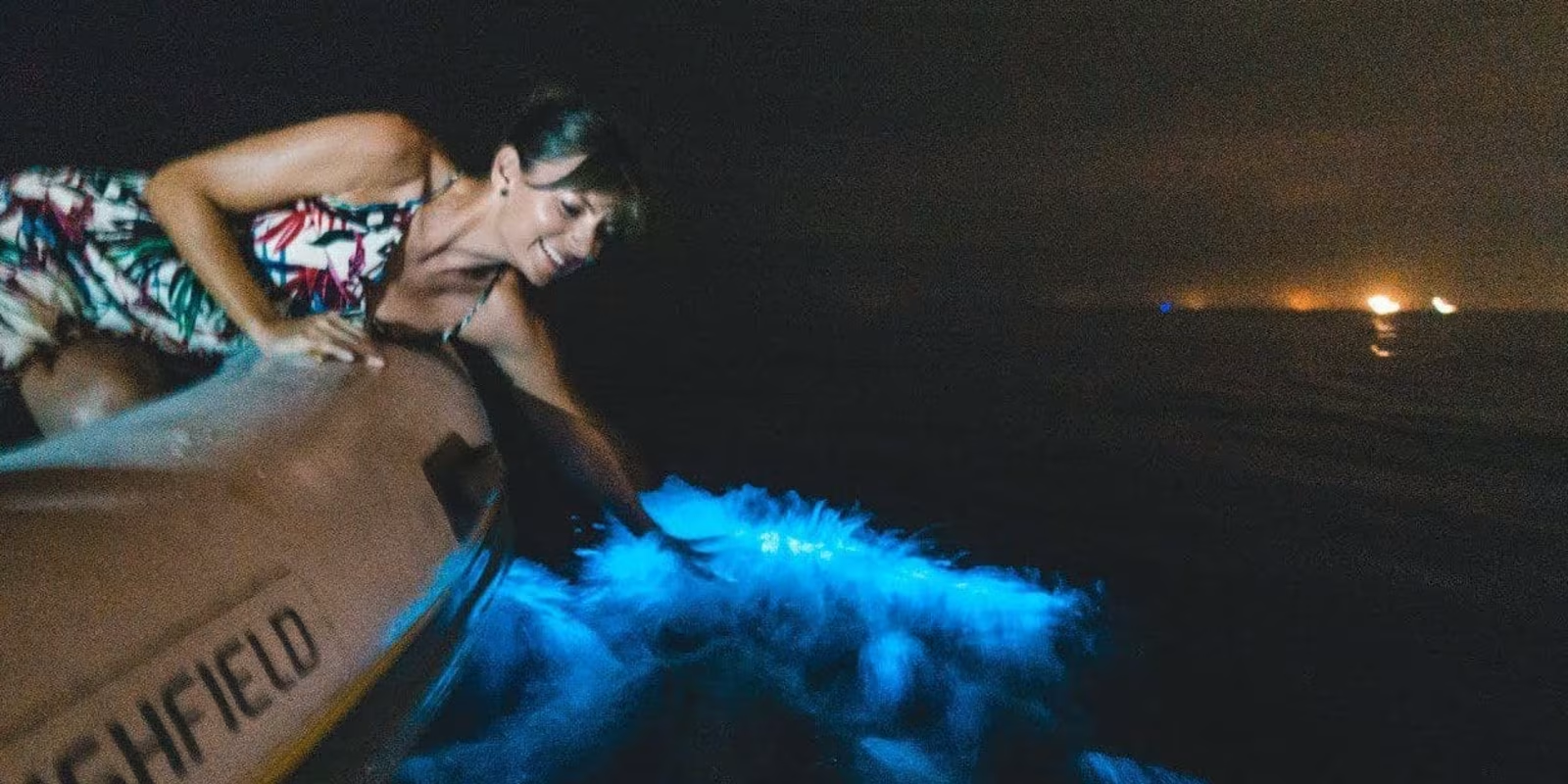
The short answer: any dark night of the year can work, but some nights are dramatically better than others. The glow in Manialtepec Lagoon comes from living plankton, so it changes with the moon, the rain and the water itself. Here is how to stack the odds in your favor.
1. The moon matters more than anything
Bioluminescence is a faint light. Moonlight washes it out the same way city lights hide the stars. On the nights around the new moon, the lagoon is pitch black and every ripple shows up in bright blue. Around the full moon, you will still see the glow when you move the water, especially in the shade of the mangroves, but it is softer.
If your dates are flexible, check a moon calendar before booking and aim for the week either side of the new moon. Moonrise time helps too: in the days after the full moon, the moon rises later each night, so the early part of the evening can still be dark.

2. Rainy season is usually the brightest
From roughly June to October, rain washes nutrients from the hills into the lagoon. The plankton feed on them and multiply, and the glow often reaches its peak. The trade-off is that you may get an evening shower. Most storms on the Oaxacan coast come in the late afternoon and pass quickly, and the tour runs in light rain.
In the dry season (November to May) the water is calmer and the skies are clearer, which makes for spectacular stargazing on the way back. The glow is still there, just usually less intense than in late summer.
3. Weather on the day
- Cloud cover is your friend on bright-moon nights: it blocks the moonlight.
- Strong wind makes the surface choppy, which can make the glow look patchy. The lagoon is sheltered, so this is rarely a problem.
- Heavy storms can cancel a departure for safety. If that happens, we reschedule or refund.
4. Why we pick the lagoon for you
The intensity also varies between parts of the lagoon and from week to week. Our guides are on the water almost every night, so they know where the glow is strongest right now. That local knowledge is the difference between a good night and an unforgettable one.
Month by month
- June to October (rainy season): usually the brightest glow of the year. Expect warm, humid evenings and the odd late-afternoon shower.
- November and December: the rains ease off and the skies clear. The glow varies more from week to week, which is where your guide's local knowledge helps.
- January to May (dry season): calm water, clear skies and the best stargazing of the year. The glow is usually softer than in late summer, but it still lights up every time the water moves.
The busiest travel weeks in Puerto Escondido, around Christmas, New Year and Easter, fall in the dry season. If you are visiting then, book a few days ahead.

The best time of night
The glow is there all the time, but you need full darkness to see it. That is why the shared tour picks you up at 6:30 PM and heads out on the water around 7:00, as night settles. The private tour leaves earlier, at 5:30 PM, so you also catch the sunset over the lagoon before the glow appears.
In the days after the full moon, the moon rises later each evening, which can leave a dark window early in the night. It is worth checking the moonrise time for your date.
How to plan your trip around the glow
- Look up the new moon for your travel dates.
- Book a night close to it, ideally early in your stay.
- Keep a backup evening free. If a storm cancels a departure, we reschedule or refund, and a spare night makes rescheduling easy. Cancellation is free up to 24 hours before the tour.
- Can't choose your dates? Go anyway. Even on a bright night, the glow shows up the moment you move the water, especially in the shade of the mangroves.
The moon phase guide goes deeper into how the moon changes what you see, and our photography tips explain why the darkest nights are also the best for pictures.
A simple rule of thumb
New moon + rainy season = the brightest glow. Full moon + dry season = still magical, plus the best stars.
Whatever your dates, the tour is worth it. Very few places in the world let you swim in bioluminescent water, and Manialtepec is just 20 minutes from Puerto Escondido.