Birdwatching at Manialtepec Lagoon by day
Most people meet Manialtepec Lagoon in the dark, with their hands trailing blue light through the water. Come back in daylight and it is a different place: herons standing motionless at the mangrove edge, kingfishers diving from low branches, pelicans gliding over open water. The lagoon is one of the best-known birding spots on this stretch of the Oaxacan coast, and it is only about 20 minutes from Puerto Escondido. This guide covers when to go, what you are likely to see and how a morning on the water usually works.
Why Manialtepec is so good for birds
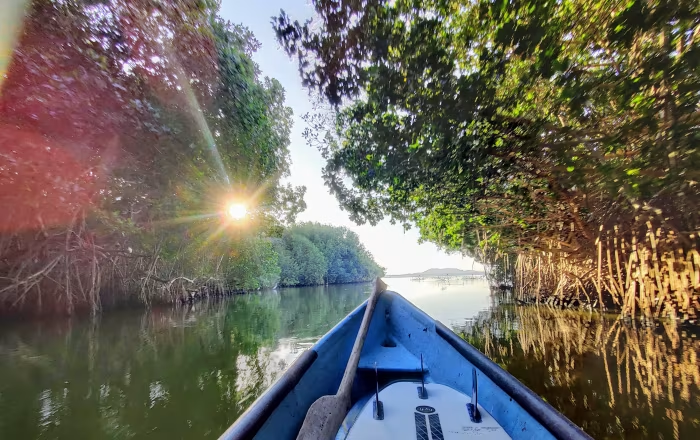
Manialtepec is a coastal lagoon: river water from the hills mixes with seawater that comes in when the sandbar opens to the Pacific. That mix feeds plankton, the plankton feeds small fish and shrimp, and those feed a lot of birds. The mangroves add the rest. Their roots are nurseries for young fish, their branches are perches and roosts, and the denser stands give nesting cover.
On top of that, the lagoon sits between very different habitats. On one side is open water and the beach, on the other mangrove channels, farmland and dry forest on the hills. That is why a single outing can mix shorebirds, waders, raptors and forest birds. It is the same nutrient-rich water that makes the lagoon glow at night, as our guide to what makes Manialtepec glow explains.
When to go
Time of day
Early morning is best. From around sunrise until the middle of the morning the water is usually flat, the air is cooler and birds are actively feeding. By late morning the heat builds, the light gets harsh and many birds settle into the shade. Late afternoon is the second-best window: the light is warm and birds start moving toward their evening roosts.
Season
There are birds at Manialtepec all year, but the mix changes:
- Roughly November to March: the northern winter. Migratory shorebirds, ducks and birds of prey such as ospreys join the resident species, so this is usually when you see the most variety. The dry season also means clearer skies and easier mornings.
- Roughly June to October: the rainy season. The landscape turns very green, resident birds are busy with breeding in many cases, and mornings are often still dry before afternoon storms. Fewer migrants, but fewer visitors too.
If you are here in the first days of November, you are at the start of the migrant season, which is a good time to go.
Birds you may see
Nothing is guaranteed with wild birds, and what you see depends on season, water level and luck. These are among the species commonly reported around the lagoon:
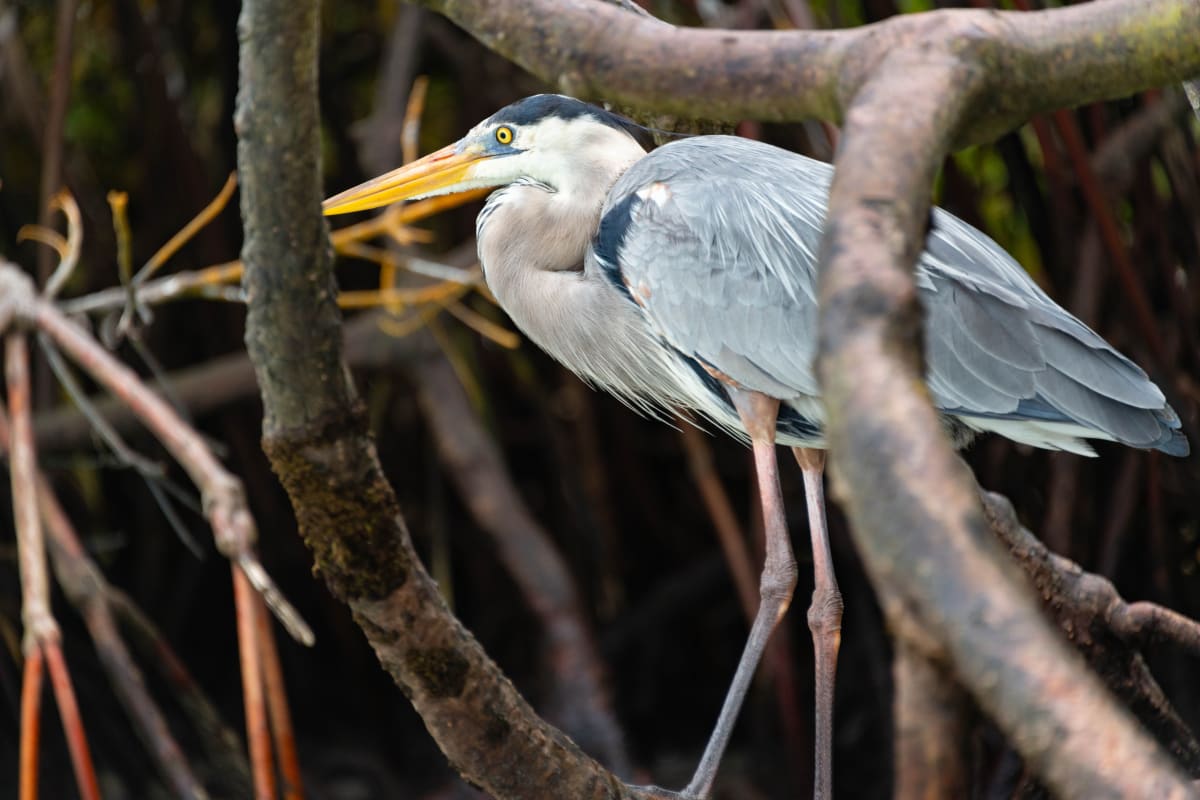
- Herons and egrets: great egrets, snowy egrets, little blue and tricolored herons, and the bare-throated tiger-heron, a big, patterned heron that often stands very still at the water's edge.
- Boat-billed heron: a stocky night heron with a wide, scoop-shaped bill. It feeds at night and spends the day roosting deep in the mangroves, so a sharp-eyed guide is usually the only way you'll spot one.
- Roseate spoonbills, white ibises and wood storks feeding in the shallows.
- Kingfishers: ringed, green and Amazon kingfishers are all found on the Pacific coast of Mexico; the big ringed kingfisher is the easiest to notice.
- Brown pelicans, neotropic cormorants and anhingas, often drying their wings on dead branches.
- Raptors: ospreys in the winter months, plus hawks and vultures over the hills.
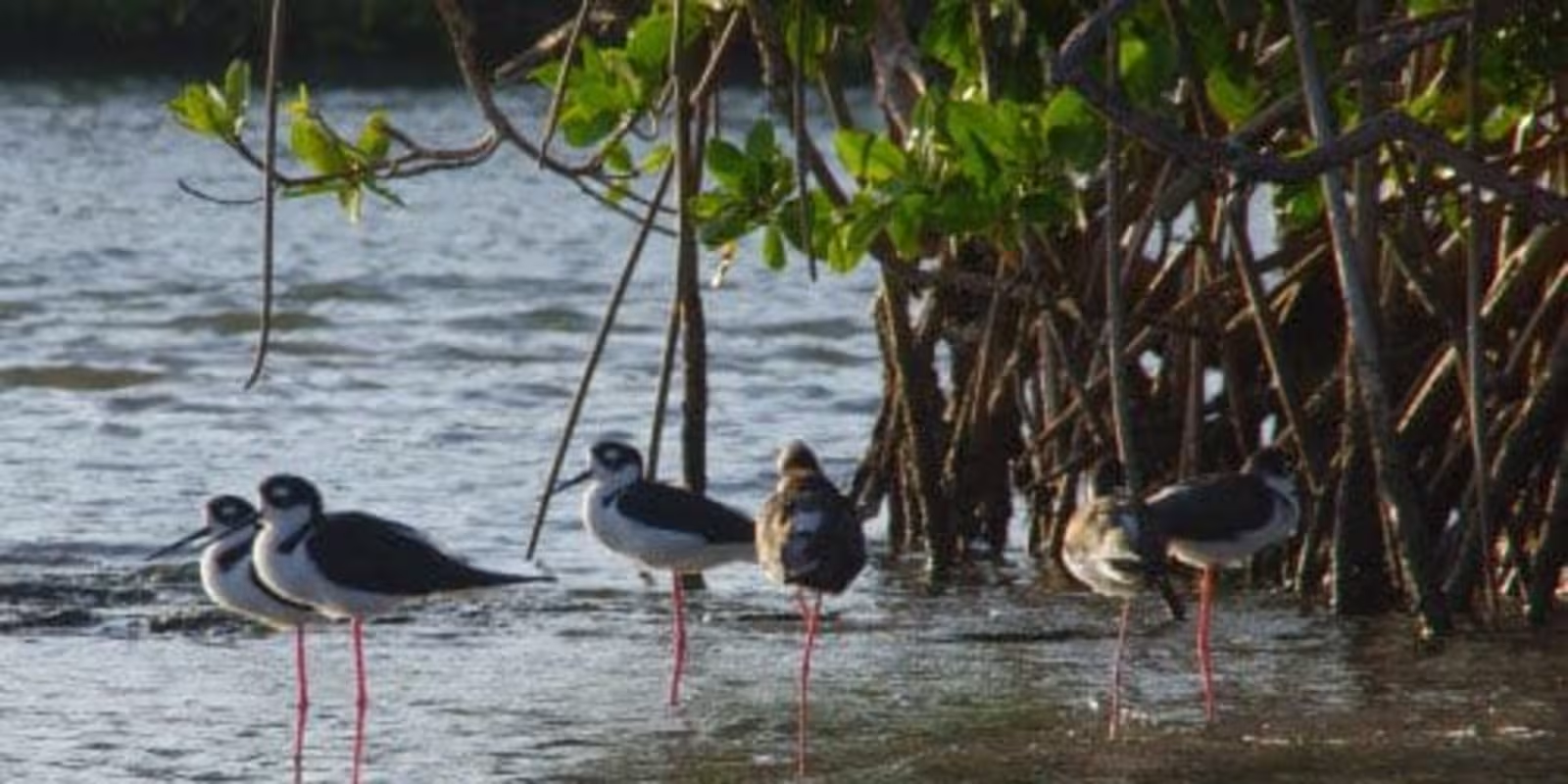
- Shorebirds and stilts, like the black-necked stilts in the photo above, especially on mudflats and near the sandbar.
- Parrots and parakeets crossing overhead in noisy groups, mostly early in the morning.
Look down too. Iguanas sunning on mangrove branches are a regular sight, and you will often see fishermen working the lagoon with cast nets.
How a birding morning works
The usual way to bird Manialtepec is by boat. Local boat operators take you slowly along the shore and into the mangrove channels, cutting or idling the engine near the birds. Going with a guide who knows the lagoon makes a real difference: they know where the boat-billed herons roost, which branches the kingfishers use and how close you can get without flushing anything.
If you want everything organized, our main site runs a guided bird watching tour on Manialtepec Lagoon with hotel pickup, a boat, a bilingual guide and binoculars, with an early-morning departure and an afternoon one. Check that page for the current times and price.
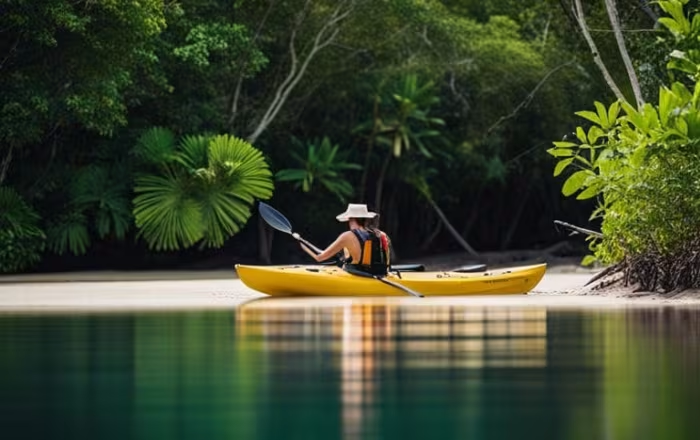
A kayak is the quietest option and lets you slip into narrow channels, but it is slower and you cover less of the lagoon. Our comparison of kayak and boat on the lagoon was written with the night glow in mind, but most of it applies to a morning trip too.
What to bring
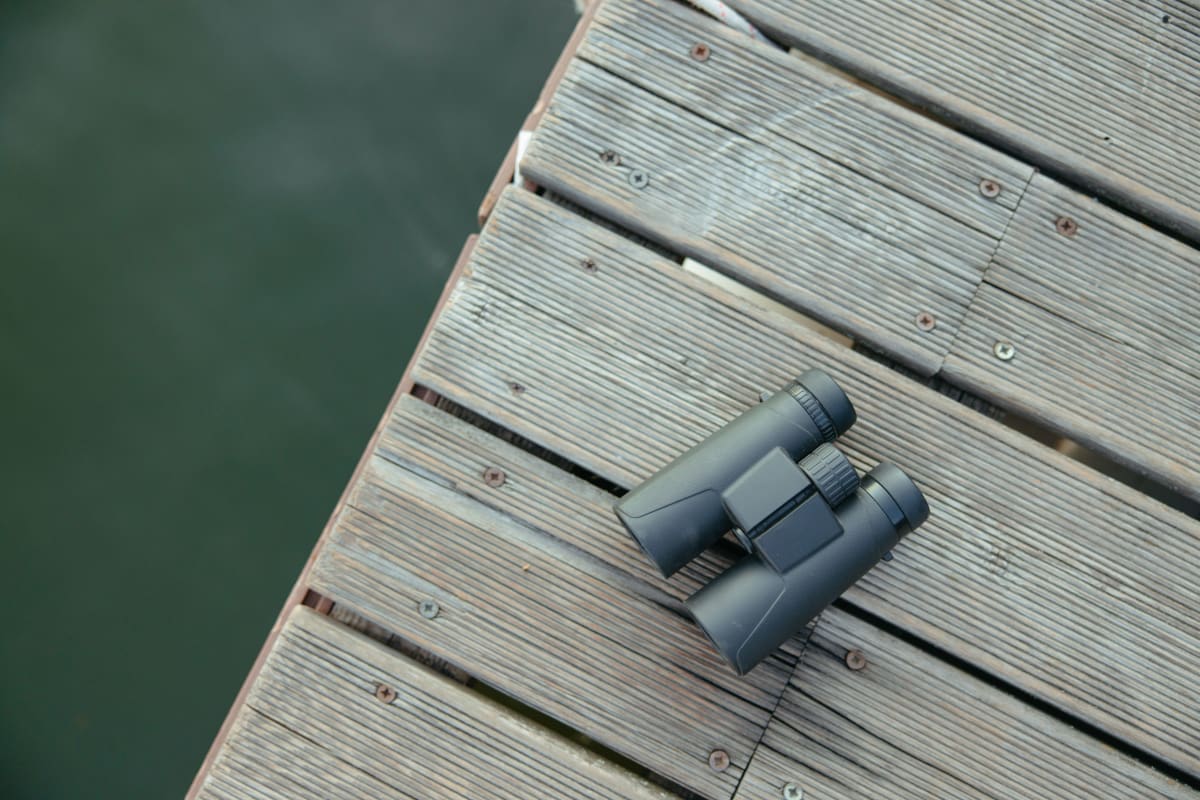
- Binoculars, even a basic pair. Many of the birds are at the far edge of the mangroves.
- A hat, sunglasses and a light long-sleeved shirt. There is very little shade on the open water.
- Water, and a snack if you go out at dawn.
- Insect repellent. Unlike the night tour, you are not swimming, so you can wear it, although apply it before boarding and keep it out of the lagoon.
- A camera with some zoom if you want photos. A phone will get you landscapes, but not much of a kingfisher.
- Neutral-colored clothes and a quiet voice. Birds notice bright colors and noise long before you notice them.
Birding by day, glowing water by night
Many visitors end up doing Manialtepec twice: once in the morning for the birds and the mangroves, and once after dark for the bioluminescence. They really are two different experiences. On the night tour the boat goes out once it is fully dark, so you won't see much wildlife, but you'll float through the same channels you birded in the morning, now lit up with every paddle stroke and every fish.
If you'd like a bit of both in one evening, the private tour picks you up at 5:30 PM and includes sunset on the water, which is when egrets and herons fly in to roost in the mangroves. The shared tour picks up at 6:30 PM and has you back at your hotel by 9:00 PM.
Birding responsibly
- Keep a respectful distance. If a bird stops feeding and starts watching you, you are too close.
- Don't ask the boat to chase flying birds or to push into roosting colonies.
- Don't touch or pull mangrove branches and roots; they are protected in Mexico.
- No playback of bird calls in the mangroves, especially in the breeding season.
- Take all your trash back with you.
Quick answers
Is Manialtepec good for birdwatching?
Yes. It is one of the best-known birding sites near Puerto Escondido, with a mix of waders, shorebirds, kingfishers and raptors that is hard to match so close to town.
Do I need to be an experienced birder?
Not at all. A guide points out and names the birds. Beginners usually enjoy it as a calm boat ride through the mangroves with a lot to look at.
Can I see birds on the bioluminescence tour?
Not many, because it runs after dark. For birds, go in the morning; for a bit of both, the private tour's sunset start is the closest thing.
Planning the trip out there on your own? Our guide on how to get to Manialtepec from Puerto Escondido covers taxis, colectivos and driving.