What makes Manialtepec Lagoon glow?
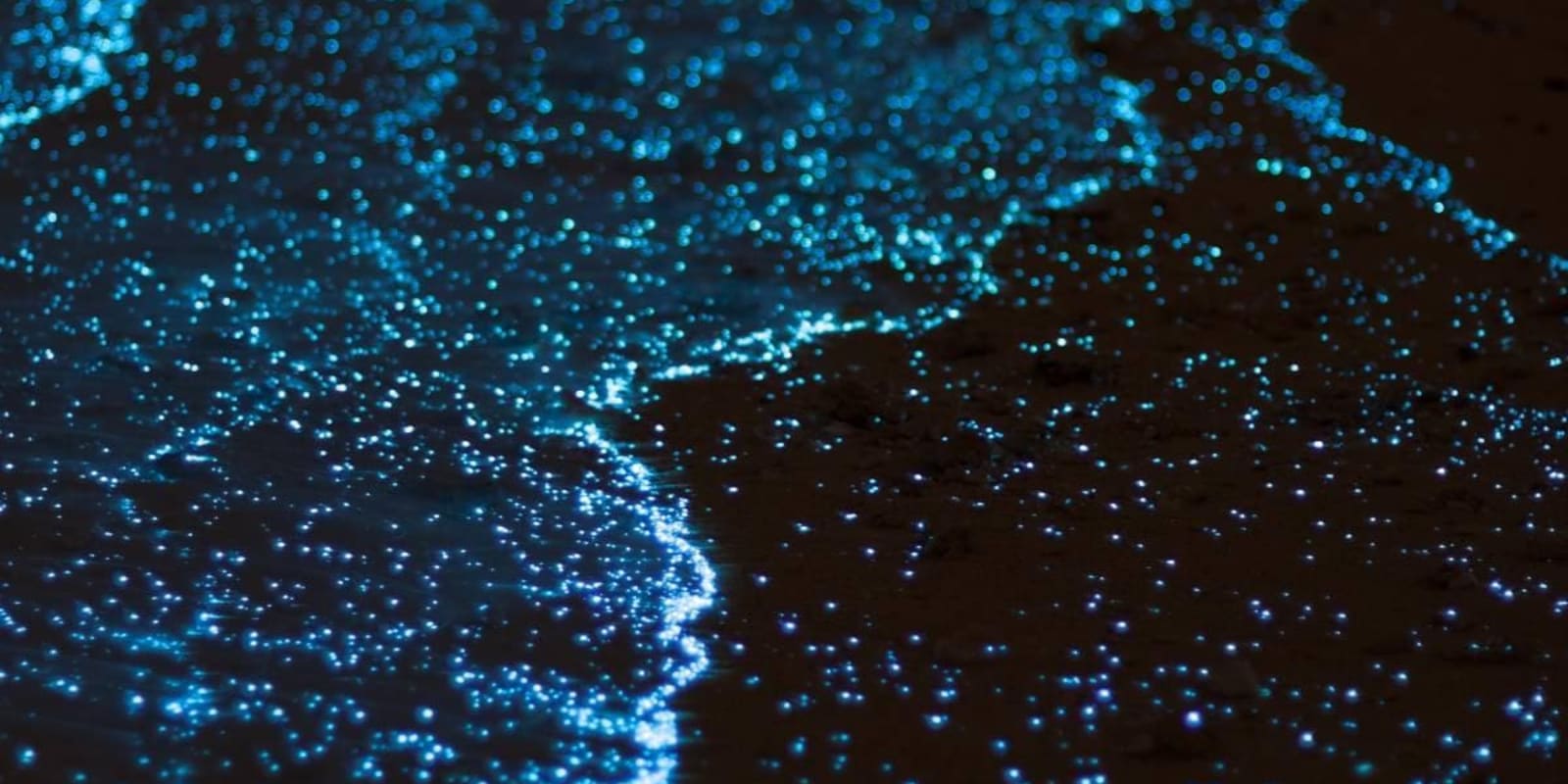
The first time you drag your hand through Manialtepec Lagoon at night and it lights up, the natural question is: what is that? The answer is millions of living things, each smaller than a grain of sand.
Meet the dinoflagellates
The light comes mostly from dinoflagellates, single-celled plankton that drift in the water. Many species can make their own light. When the water around them is disturbed, by a paddle, a fish or your arm, the pressure changes their cell membrane and triggers a tiny flash.
How living things make light
Inside each cell, a molecule called luciferin reacts with oxygen with the help of an enzyme called luciferase. The reaction releases energy as visible light instead of heat, which is why it is sometimes called "cold light". The same basic chemistry powers fireflies, some jellyfish and many deep-sea fish.
The flash lasts a fraction of a second. You see a continuous trail only because thousands of cells fire one after another as the water moves.
Why do they glow at all?
Scientists think it is a defense. The leading idea is the "burglar alarm" theory: when a small predator starts eating the plankton, the flash makes the predator visible to bigger animals that hunt it. Lighting up is a way of calling for help.
Why Manialtepec is special
Bioluminescent plankton live in oceans all over the world, but they are usually too spread out to notice. Manialtepec Lagoon has the right combination to concentrate them:
- Warm, shallow water that stays calm and sheltered from the open ocean.
- Mangroves that feed the water with nutrients from fallen leaves.
- Seasonal rains that wash in more nutrients and trigger plankton blooms.
- Little light pollution, so even a faint glow is easy to see.
How to protect it
The plankton are sensitive. Sunscreen, lotions and insect repellent harm them, which is why we ask guests to get in the water with clean skin. Our guides also keep boat traffic and engine use low in the glowing areas. Small habits like these are what keep the lagoon glowing for the next visitors.