Bioluminescence vs fluorescence vs phosphorescence: what's the difference?
On the boat back from the lagoon, somebody always reaches for a word to describe what they just saw. "Phosphorescence," says one. "Like fluorescent paint," says another. Both are understandable, and both are technically wrong. The blue light in Manialtepec Lagoon is bioluminescence, and once you know how it differs from fluorescence and phosphorescence, a lot of the practical advice about the tour suddenly makes sense: why we go on dark nights, why flashlights don't help and why you have to move the water to see anything.
The short answer
All three are ways of giving off light without heat, but the energy comes from a different place each time:
- Bioluminescence is light made by a living thing through a chemical reaction inside its body. It needs no outside light at all.
- Fluorescence is light that a material absorbs and gives back almost instantly, usually in a different color. It stops the moment the light source is switched off.
- Phosphorescence is light that a material absorbs and releases slowly, so it keeps glowing for seconds, minutes or even hours after the lights go out.
Put simply: bioluminescence makes its own light, fluorescence reflects borrowed light back immediately, and phosphorescence stores borrowed light and lets it out bit by bit.
Bioluminescence: living light
In a bioluminescent organism, a molecule called luciferin reacts with oxygen with the help of an enzyme, luciferase. The energy from that reaction leaves as a flash of visible light. Fireflies, many deep-sea fish, some jellyfish, certain fungi and the plankton of Manialtepec all use versions of this chemistry. NOAA Ocean Exploration has a good overview of how and why sea creatures make light.
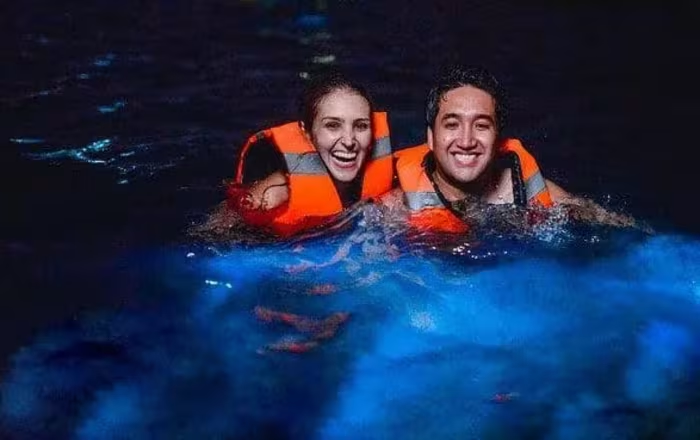
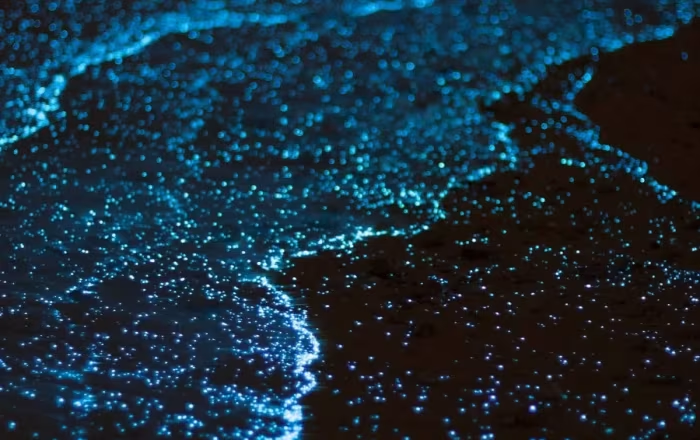
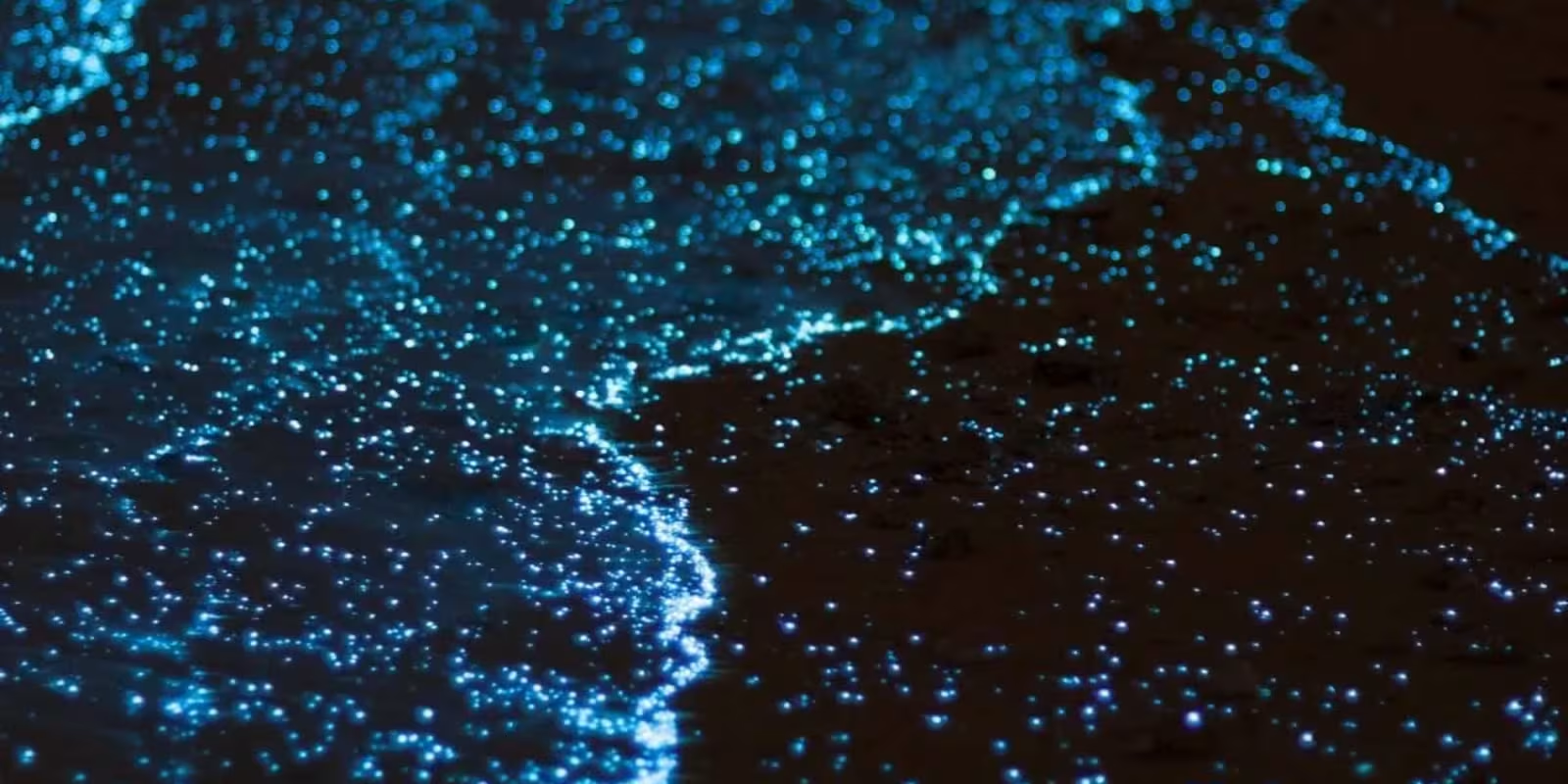
In the lagoon, the light comes mostly from dinoflagellates, single-celled plankton that flash when the water around them is disturbed. That is the key detail: they don't glow constantly. A paddle, a fish or your hand bends the cell, the reaction fires and you see a spark that lasts a fraction of a second. Thousands of sparks in a row make the trail behind your arm. Our guide to what makes Manialtepec Lagoon glow goes deeper into the plankton themselves.
A close cousin is chemiluminescence, which is the same idea without the living part. A glow stick works this way: you crack it, two chemicals mix and they give off light. Bioluminescence is, in a sense, chemiluminescence that evolved inside an animal or a plant cell.
Fluorescence: borrowed light, returned instantly
A fluorescent material absorbs light, usually ultraviolet or blue, and immediately sends it back out at a longer wavelength, which is why it often looks like a different color. The delay is so short that, for our eyes, the glow lasts exactly as long as the light shining on it. Switch off the lamp and it is gone.
You see it all the time without noticing: highlighter ink, the white of a shirt under a black light, safety vests. Nature uses it too. Many corals glow green or orange under blue light, and scorpions shine a ghostly blue-green under an ultraviolet torch. Scientists call fluorescence in living things biofluorescence, which is where the confusion with bioluminescence often starts.
The famous example that links the two is a jellyfish from the northern Pacific, Aequorea victoria. It makes blue light with a bioluminescent protein, and a second protein, now known worldwide as green fluorescent protein, absorbs that blue and re-emits it as green. One animal, both phenomena, working together.
Phosphorescence: light stored and released slowly
Phosphorescence also starts with absorbed light, but the material holds on to the energy and lets it out gradually. The glow-in-the-dark stars on a child's ceiling, the hands of some watches and many emergency exit signs work this way. You "charge" them with light and they fade slowly in the dark.
So why do so many people call the glowing sea "phosphorescence"? Sailors used the word for centuries, long before anyone understood the chemistry, and it stuck in travel writing. The name even traces back to the element phosphorus, which was named for its eerie glow, although that glow turned out to be a chemical reaction with air, not true phosphorescence either. The ocean's sparkle is living light. Calling it phosphorescence is a bit like calling a firefly fluorescent.
How to tell them apart at the lagoon
You don't need a lab. Three simple questions settle it:
- Does it glow in complete darkness? Fluorescence needs a light shining on it, so in total darkness it can't be fluorescence.
- Did it need "charging" first? Phosphorescent things glow after being exposed to light and then fade steadily. The lagoon glows on the darkest nights without any charge.
- Does it respond to movement? Only living light behaves like this. Still water looks black; stir it and it sparks. That on-off response to touch is the signature of bioluminescent plankton.
At Manialtepec, the answers are yes, no and yes. That is bioluminescence, every time.
Why the difference matters on your tour
This isn't only trivia. Knowing the plankton make their own light explains most of the advice we give guests:
- Darkness is your friend. The plankton don't need moonlight or sunlight to glow; extra light just washes out a faint natural signal. That is why moonless nights look brighter. Our moon phase guide explains how to pick your date.
- Flashlights don't help. Shining a light at the water won't "charge" it the way it charges a glow-in-the-dark toy. It ruins everyone's night vision, and in some plankton species bright light can even dampen the glow for a while. Keep phones on dark mode and torches pointed at the floor of the boat.
- Move the water. Since the flash is triggered by disturbance, the show is in your hands: trail your fingers, kick gently while you swim, watch the paddles and the wake.
- Photos are hard. Each flash is tiny and brief, so phones struggle. That is a feature of living light, not a problem with your camera. Our bioluminescence photography tips show what actually works.
Quick answers
Is bioluminescence the same as fluorescence?
No. Bioluminescence is light made by a chemical reaction inside a living thing. Fluorescence is light absorbed from a source and given back instantly. Some animals use both.
Is the glowing sea phosphorescence?
No, although the word is still common. Glowing seas and lagoons are lit by bioluminescent plankton. True phosphorescence is a material slowly releasing light it absorbed earlier.
Is bioluminescence a type of chemiluminescence?
Yes. Chemiluminescence is any light from a chemical reaction, like a glow stick. Bioluminescence is the version that happens inside living organisms.
Does a UV light make the lagoon glow brighter?
No. UV light reveals fluorescence, not bioluminescence. At the lagoon it only adds light to a scene that looks best in the dark.
Wondering whether all that glowing plankton is safe to swim in? Read is bioluminescence toxic? for the honest answer about plankton, red tide and your skin.