Bioluminescence and the moon: how to choose your night

Ask our guides what makes the biggest difference to a bioluminescence night and most of them will point at the sky. The plankton in Manialtepec Lagoon glow every night, but their light is faint, and the moon decides how much of it your eyes can actually pick up. The good news: you don't need a new moon to get a dark lagoon. You need to know when the moon is up, not just what shape it is.
Why the moon changes what you see
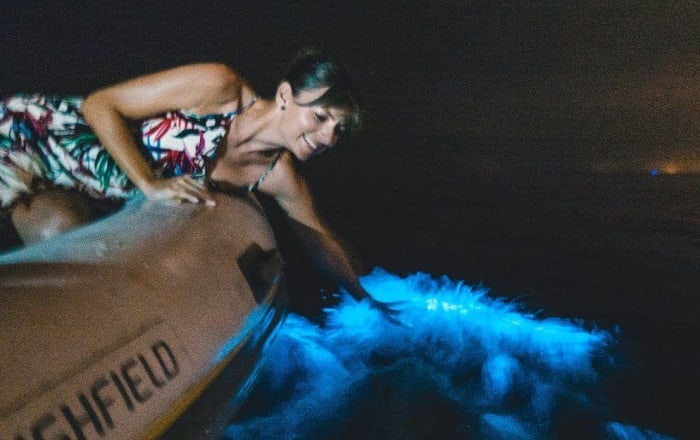
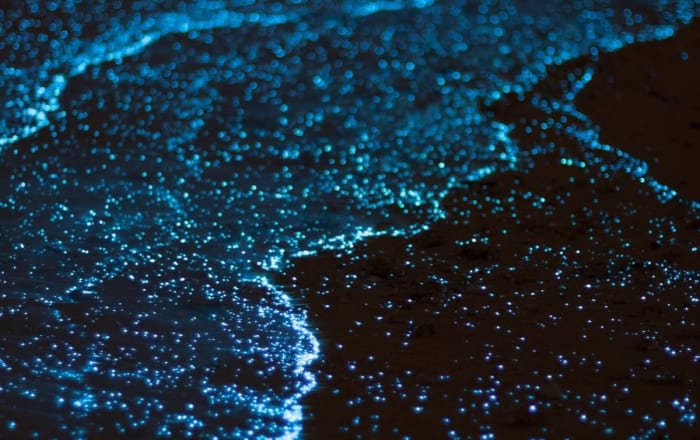
The moon doesn't switch the plankton off. The dinoflagellates that make the light flash whenever the water moves, whatever the sky is doing. What changes is contrast. A single flash from one of these organisms is tiny, and the lagoon glow is millions of them together. Against a pitch-black background your eyes adapt and the trails around the boat look electric blue. Under bright moonlight the water surface reflects the sky, your pupils stay smaller, and the same glow looks paler, a bit like stars disappearing over a lit-up city.
So the useful question isn't "is it a full moon?" but "will the moon be above the horizon while I'm on the water?" On the shared tour you are on the lagoon from about 7:00 PM to 8:15 PM. That 75-minute window is what matters.
The moon phase by phase, for an evening tour
The moon rises roughly 50 minutes later each day. That simple fact means each phase gives a very different evening sky. Here is what to expect on the water between 7:00 and 8:15 PM:
New moon: the darkest nights
The moon is close to the sun and not in the night sky at all. These are the nights with the strongest contrast, when every paddle stroke and every fish leaves a bright streak. If you can choose any night of the month, this is the one.
Waxing crescent (first few days after new moon)
A thin moon hangs low in the west after sunset and sets a few hours later. In the first two or three days it gives very little light and is often gone or behind the hills by the time you're in the mangroves. Still a very good choice.
First quarter and waxing gibbous: the brightest evenings
Around a week after new moon, the half moon is already high in the sky at sunset and stays up until about midnight. In the following days it grows fuller and brighter, and it's overhead for your whole tour. Counterintuitively, these few days before the full moon are often the brightest evenings on the lagoon, because the moon is high instead of low on the horizon.
Full moon: bright, but low early in the evening
The full moon rises around sunset in the east. In the early evening it's still low, and the mangroves can shade parts of the channel from it. You will still see the glow when you move the water, and swimming in the shadow of the trees helps a lot, but the lagoon won't have that deep-black look of a new-moon night.
Waning gibbous: the late-rising moon is your friend
After full moon, moonrise comes later every night. One day after full, it rises shortly after dark. About three days after full, it usually comes up around the time you're heading back to shore. From then on, the tour runs under a moonless sky even though the calendar still shows a big moon.
Last quarter and waning crescent: dark evenings
The last-quarter moon rises around midnight and the waning crescent only before dawn. For an evening tour, these nights are practically as dark as a new moon. Many travelers skip them because the moon looks "big" on the calendar icon, which is exactly why they're worth knowing about.
The practical rule: roughly half the month is dark
Put the phases together and you get a simple pattern. From about three days after the full moon, through the new moon, until about three days into the waxing crescent, the sky is dark or nearly dark during the tour. That's roughly two weeks out of every lunar cycle. The nights to avoid if you have a choice are the week leading up to the full moon and the full moon night itself.
To check your dates, look up the moonrise and moonset times for Puerto Escondido in any moon or weather app, not just the phase. If the moon rises after about 8:30 PM, or sets before 7:00 PM, you'll have a dark lagoon. NASA has a clear explainer on why the moon rises at different times through its phases if you want the astronomy behind it.
What if your only free night is a full moon?
Go anyway. The glow doesn't disappear under a full moon, it just becomes softer. A few things help:
- Get in the water. The glow is always most visible right around your own arms and legs, where you are moving the most water.
- Look into the shade. The water under the mangroves and on the side of the boat away from the moon stays darker.
- Let your eyes adjust. Keep phone screens off on the boat. A few minutes without bright light makes a visible difference.
- Hope for clouds. A layer of cloud over the moon can turn a bright night into a dark one, and it often happens in the rainy season.
Full-moon nights have their own reward too: the boat ride through the mangroves under moonlight is beautiful, and you can see the shape of the lagoon around you.
What about the private tour?
The private tour picks you up at 5:30 PM so you can see the sunset on the lagoon, and the boat is yours for the evening. Because you start earlier, a moon that is already up at dusk matters more: the glow only really shows once the sky is fully dark. If you're booking a private tour for a group, the days around the new moon and the late waning phases are the safest bet for a strong glow after sunset.
The moon is one factor, not the only one
A dark sky makes the glow easier to see, but how much plankton is in the water depends on the season and the rain. The brightest nights usually combine a dark moon with the rainy months, roughly June to October. We cover the season side in our guide to the best time to see bioluminescence in Puerto Escondido, and what to wear and bring in our tips for your first bioluminescence tour.